You don’t need a garage full of power tools to build something impressive. Some of the finest furniture, cabinets, and decorative pieces have been crafted with nothing but hand woodworking tools, chisels, saws, planes, and hammers. Woodworking with hand tools offers control, affordability, and a direct connection to your materials that power equipment can’t replicate. Whether you’re assembling a bookshelf, building a cutting board, or tackling furniture repair, understanding the core hand woodworking tools will set you up for success. This guide covers the essential hand tools every DIY woodworker should own, how to pick ones that last, and why they matter for your projects.
Table of Contents
ToggleKey Takeaways
- Woodworking hand tools offer superior precision, affordability, and durability—a basic starter kit of saw, chisel, hammer, and mallet costs under $150 and can last generations.
- Hand tools teach fundamental woodworking skills like proper grain direction and wood movement that transfer to any construction method and help avoid mistakes like tearout or splintering.
- Quality matters more than quantity: invest in mid-range hand woodworking tools with full tangs and sharp edges rather than cheap 10-piece sets, and always test tools in-hand before purchasing.
- Japanese pull saws and chisels provide excellent value for beginners, with pull saws costing $25–60 and allowing better control in tight joints compared to traditional Western saws.
- Proper maintenance—wiping metal parts dry, storing tools in racks or sheaths, and keeping blades sharp—dramatically extends the life of hand tools and improves both safety and efficiency.
- Start projects first, then buy tools as needed, rather than impulse-purchasing: this approach prevents clutter and ensures you own hand tools you’ll actually use regularly.
Why Hand Tools Matter for Woodworking
Hand tools give you precision that’s harder to achieve with power equipment. When you’re making a mortise (a recessed hole in wood), cutting a tenon (the protruding piece that fits into a mortise), or fitting dovetail joints, hand tools let you feel the wood, adjust on the fly, and avoid tearout or splintering. Power saws are loud and wasteful on small projects: hand saws let you work in tight spaces and use less material.
They’re also more affordable to start with. A basic hand saw runs $15–40, while a decent miter saw costs $150+. Hand tools don’t require electrical outlet planning, extension cords, or a dust collection system. They’re portable, durable, and if maintained, can outlast several generations of equipment. Plus, there’s something satisfying about relying on muscle memory and control instead of motor noise.
For beginners, hand tools teach you fundamentals: proper grain direction, wood movement, how to read grain patterns to avoid splits. These skills transfer to any woodworking method. Many experienced craftspeople use hand tools exclusively or combine them with selective power tools for efficiency. Even if you own a workshop full of equipment, having reliable hand woodworking tools ensures you’re never stuck when power isn’t available or precision matters most.
Must-Have Hand Tools for Beginners
Building a functional kit starts with tools that handle the most common tasks: measuring, cutting, fastening, and shaping. You don’t need everything at once, buy strategically, test what works for your style, and add as projects demand.
Saws and Cutting Tools
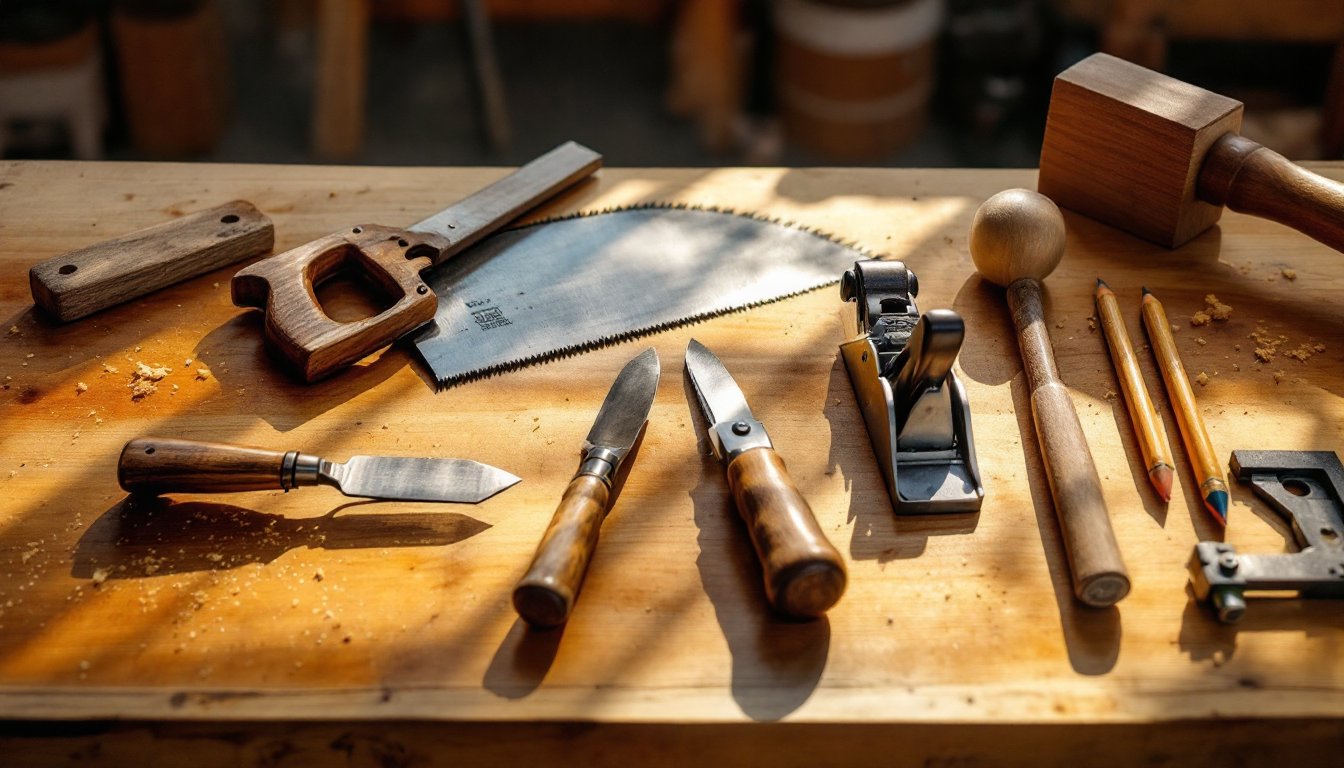
A crosscut saw (10–14 inches long) cuts wood across the grain for shorter, cleaner breaks. A ripsaw runs parallel to the grain for lengthwise cuts. For beginners, a combination saw that handles both is a smart entry point. Look for a saw with 8–10 teeth per inch (TPI): finer teeth (12–15 TPI) leave smoother surfaces but require more effort.
A Japanese pull saw ($25–60) is intuitive for most DIYers because you cut on the pull stroke, not the push, giving better control. The blade is thinner than Western saws, so it removes less material and works well in tight joints. If you’re building or repairing furniture, a good pull saw pays for itself quickly.
Chisels are indispensable for detail work. A butt chisel (1 inch wide) handles mortises, joint cleanup, and fine shaping. A paring chisel (narrower) fits tight corners. Start with a set of two or three quality chisels ($15–30 each) rather than a cheap 10-piece set: better steel holds an edge longer and feels better to use. Keep chisels sharp, a dull chisel slips and causes injuries. A sharpening stone or honing guide ($20–50) becomes essential quickly. Hand tool resources like Fix This Build That and The Handyman’s Daughter include project plans that rely on precise chisel work.
A block plane ($30–80) smooths rough edges and fits in one hand. It’s less intimidating than a full-size hand plane and handles most edge-shaping tasks. If you move into furniture building, a full-size plane adds versatility, but a block plane covers 80% of beginner needs.
Hammers, Mallets, and Fastening Tools
A 16-ounce claw hammer is the workhorse for driving nails and removing them. Fiberglass or wood handles absorb shock better than metal. Avoid ultra-cheap hammers, the head can loosen or separate, which is dangerous.
A wooden mallet ($15–35) drives chisels without damaging them. Steel hammers dent chisel handles: a mallet transfers force evenly. If you’re doing any joinery or chisel work beyond basic repairs, a mallet is non-negotiable.
A torpedo level (2–3 feet long) ensures projects are square and plumb. Levels don’t have to be expensive, even a $10 aluminum level works, though quality levels hold accuracy longer. A hand level prevents frustrating wobbles and out-of-square frames.
A sliding bevel lets you copy and transfer angles, essential for cutting roof pitches or matching existing trim. Pair it with an adjustable square ($15–30) to lay out angles and check 90-degree corners. Better-quality squares have etched markings and stay accurate through years of use. Measuring Tools in Workshop: Get It Right Every Time covers precision techniques that apply to hand tool work.
A handsaw set, saw, chisel, and hammer, gives you cutting, shaping, and fastening covered. From there, add a pry bar or wrecking bar ($15–25) for demolition and careful material removal. When extracting nails or opening old joints, a pry bar saves your chisels and prevents mushroom damage on trim.
Choosing Quality Tools That Will Last
The temptation to buy the cheapest hand tools is strong, but cheap tools frustrate you and waste time. A dull, poorly balanced saw tires your arms and delivers rough cuts. A chisel with soft steel won’t hold an edge and slides unpredictably.
When shopping, feel the tool in your hand. Weight distribution matters, a saw should balance naturally, not pull downward. Check the handle: wood should feel smooth (no splinters), and the grain should run along the handle’s length (not across), which prevents splitting. Fiberglass handles are durable but can feel slick when wet.
Look for tools with full tangs (the metal shaft runs the full length of the handle, not just partway). A full tang means the head won’t loosen or separate. Mid-range brands, not fancy, not bargain basement, typically offer the best value. Japanese brands excel at saws: European makers dominate chisels: American manufacturers like Vaughan & Bushnell are solid for hammers.
Hands-on testing beats online reviews. Visit a local workshop store or tool rental center where you can grip options before buying. Some professional woodworkers swear by vintage tools from the 1950s–80s, which often outperform new equivalents because older steel was better. Estate sales and local classifieds offer used hand tools at a fraction of retail price, just inspect for cracks, bent handles, or severely rusted blades.
Once you own tools, care extends their life dramatically. After each use, wipe metal parts with a dry cloth: rust starts fast on bare steel. Store chisels in a rack or sheath, never loose in a drawer where they bang together and dull. Keep saws in a saw box or wall rack to protect teeth. Every few months, apply a thin coat of wax or machine oil to metal parts to prevent oxidation. Sharp tools are safer and more efficient, budget for basic Tool Sharpening Services: Unlock or learn to use a honing stone (they cost $20–40 and last decades).
Don’t buy tools until you need them. Many DIYers accumulate clutter by impulse-buying on sale. Instead, start a project, identify what tools you lack, and research. This method ensures you buy for actual use, not wishful thinking. Best woodworking hand tools are the ones you pick up regularly, so let your projects guide your collection.
Conclusion
Mastering woodworking with hand tools opens doors to furniture building, repairs, and creative projects that power tools alone can’t deliver. Start with a saw, chisel set, hammer, and mallet, under $150 for solid-quality pieces. As your skills grow, add specialized tools for specific techniques. Resources like This Old House showcase how hand tools fit into real renovation work. Keep tools sharp, store them properly, and they’ll serve your DIY projects for decades.