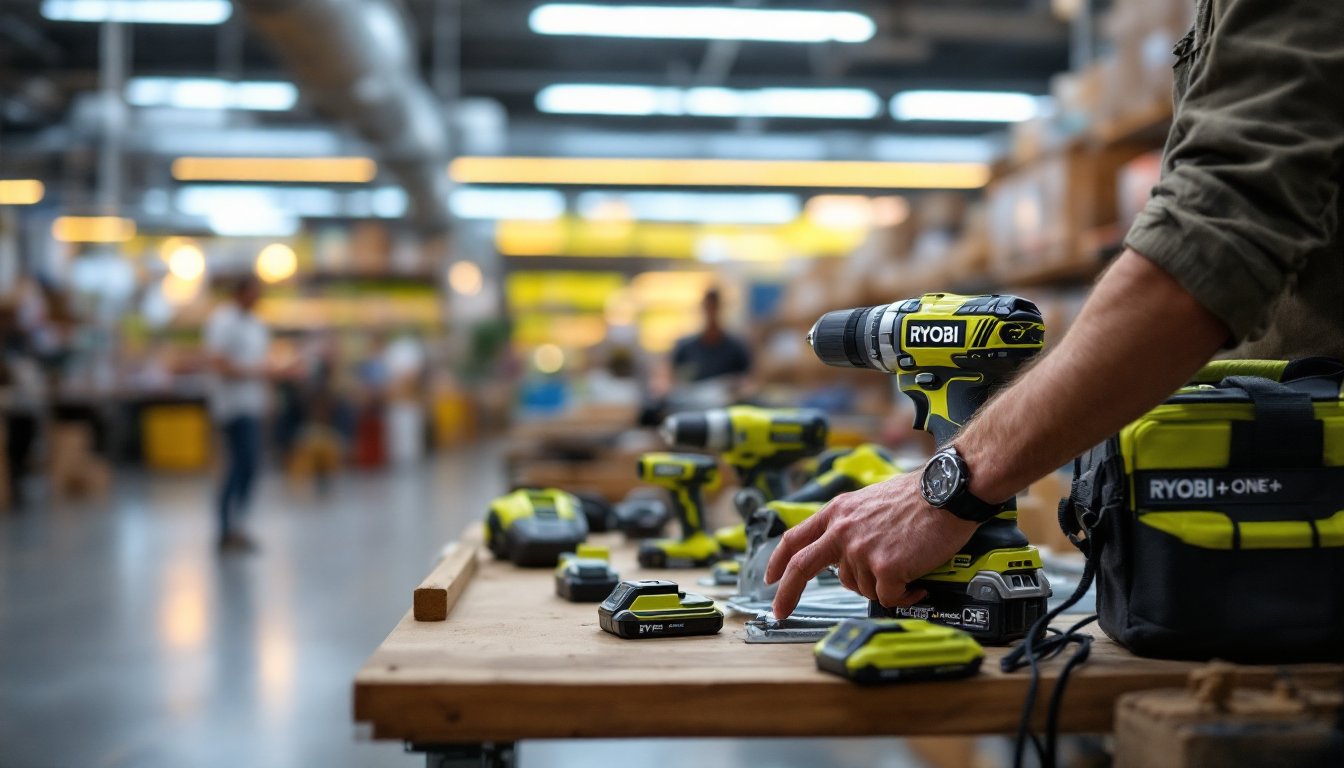
When you’re standing in a home improvement aisle or scrolling through online tool options, you’ve probably seen Ryobi’s distinctive green and yellow branding. But who actually makes Ryobi tools? The answer might surprise you, Ryobi isn’t an independent manufacturer. It’s part of a massive global conglomerate called Techtronic Industries, known as TTM. Understanding the company structure, where Ryobi tools are actually manufactured, and what that means for quality and performance can help you make smarter purchasing decisions for your workshop. Whether you’re a seasoned DIY enthusiast or just starting your first renovation, knowing the story behind your tools matters.
Table of Contents
ToggleKey Takeaways
- Ryobi tools are made by Techtronic Industries (TTM), a Hong Kong-based manufacturer that has owned the brand since 2000 and also owns Milwaukee, Homelite, and AEG.
- Who makes Ryobi tools matters because TTM’s global manufacturing networks, R&D resources, and quality oversight ensure consistent product performance across multiple facilities in Asia.
- Ryobi’s manufacturing is distributed globally across multiple facilities, primarily in China and Japan, with product-specific production designed to maintain quality while keeping consumer prices competitive.
- The Ryobi One+ battery ecosystem is a key innovation that allows the same battery to work across dozens of tools, justifying long-term investment in the brand for DIY homeowners.
- For residential DIY work and home renovation projects, Ryobi tools deliver solid performance at an accessible price point, though professional-grade competitors may offer greater durability under sustained heavy use.
- Quality and reliability have improved substantially over the past decade thanks to TTM’s investment in engineering, battery technology, and modern safety features like electronic brakes and anti-kickback mechanisms.
The Company Behind Ryobi: TTM and Its Global Ownership
Ryobi has been around longer than most people realize. The brand started making power tools in Japan in 1968 and built a reputation for affordable, reliable equipment. In 2000, Techtronic Industries (TTM) acquired Ryobi, expanding the brand under the larger parent company umbrella. TTM is a Hong Kong–based manufacturer that owns several major tool brands, including Milwaukee, Homelite, and AEG, making it one of the world’s largest power tool companies.
TTM’s acquisition strategy has been key to Ryobi’s growth. By bringing Ryobi under the TTM umbrella, the parent company could leverage global manufacturing networks, R&D resources, and distribution channels that a smaller independent maker couldn’t access. This is why Ryobi has been able to keep prices competitive while maintaining consistent product updates. TTM operates manufacturing facilities across multiple countries and continents, which directly influences where your Ryobi drill or saw is made.
Today, TTM is a publicly traded company generating billions in annual revenue. For homeowners, the practical takeaway is this: Ryobi tools have the backing of a massive industrial corporation with decades of experience in power tools. That’s a reassurance for warranty support, parts availability, and long-term product viability, something you want when you’re investing in workshop equipment.
Ryobi’s Manufacturing Locations and Production Process
Where Ryobi Tools Are Actually Made
This is where it gets practical: Ryobi tools aren’t all made in one place. Manufacturing is distributed across multiple facilities globally, with production centered in Asia, particularly China and Japan. TTM operates factories in these regions, and Ryobi leverages this network to produce different product categories. Some tools come from TTM’s own facilities, while others are manufactured by contract partners under TTM’s quality oversight.
Where are Ryobi tools made? The honest answer is it depends on the specific product. Cordless drill-drivers, for example, might be manufactured differently than a miter saw or a leaf blower. TTM’s approach is to manufacture where it makes economic and logistical sense while maintaining quality standards. This global supply chain strategy is how brands keep consumer prices down without drastically cutting corners.
The manufacturing process itself follows strict quality control protocols. Components are sourced globally, assembled in dedicated facilities, and tested before shipment. Recent studies on power tool manufacturing show that when products are made under consistent quality standards, regardless of geographic location, performance and durability remain predictable. What matters more than where a tool is made is how it’s made: assembly quality, material selection, and testing procedures.
Ryobi’s cordless battery systems, for instance, are crucial to understand. These batteries are engineered and produced under TTM specifications, often in partnership with component suppliers. The batteries use lithium-ion technology, which means they’re built to modern standards for charge retention and lifespan. When you buy a Ryobi cordless tool, you’re getting a product that’s been through the same rigorous manufacturing pipeline as more expensive competitors, the price difference usually comes from brand positioning and marketing, not necessarily from a gap in manufacturing quality.
Product Lines and Specializations
Ryobi manufactures an enormous range of products. The core line includes cordless drill-drivers, impact drivers, circular saws, miter saws, orbital sanders, and table saws, the workhorse tools in most DIY garages. Beyond that, the brand offers specialty equipment: leaf blowers, pressure washers, angle grinders, and even lawn mowers. Each product category has its own engineering and manufacturing requirements, which is why TTM uses specialized facilities for different tool types.
The One+ battery ecosystem is Ryobi’s flagship innovation. This system allows you to swap the same battery across dozens of different tools, a huge convenience factor that justifies staying within the Ryobi ecosystem for many homeowners. The batteries themselves are rigorously tested for safety and performance. This interchangeability wouldn’t be possible without TTM’s investment in compatible platform engineering across all product lines.
Ryobi also manufactures tools specifically designed for different skill levels. Entry-level homeowners might start with the basic drill-driver, while more ambitious DIYers gravitate toward the contractor-grade models with higher torque and runtime. This tiered approach means Ryobi covers the entire cost spectrum, you’re not paying for features you don’t need if you’re just hanging shelves, but you can access more powerful equipment if your projects demand it.
When comparing performance, many homeowners wonder how Ryobi stacks up against brands like DeWalt or Milwaukee. The reality is nuanced. Ryobi tools are absolutely capable for residential DIY work, renovations, and light construction. They’re built on the same foundational engineering principles as premium brands. Where premium brands sometimes edge out Ryobi is in durability under sustained professional use, not in basic home improvement tasks.
Why Ryobi Tools Matter for DIY Homeowners
For the average homeowner, Ryobi tools hit a practical sweet spot: they’re affordable, widely available, and they work. You can walk into a big-box retailer and find batteries, chargers, and replacement parts without hunting. That availability is critical when you’re in the middle of a project and need a spare battery or a replacement brush.
The Ryobi One+ system creates an ecosystem advantage. Once you’ve invested in a couple of batteries and chargers, adding new tools becomes more economical because you’re not buying duplicative power supplies. A contractor using the same tools 40 hours a week might wear through Ryobi equipment faster than a homeowner using them for weekend projects, but for typical residential use, deck building, interior trim work, cabinet assembly, Ryobi tools are genuinely adequate.
Quality and reliability have improved noticeably over the past decade. TTM’s investment in R&D shows in feature updates, better ergonomics, and longer battery runtimes. Current-generation Ryobi cordless tools are substantially better than models from five or six years ago. If you’ve got older Ryobi equipment in your garage and haven’t checked what’s available now, you might be surprised at the performance improvements.
Safety is built in. Ryobi tools include modern safety features: electronic brakes on saws, anti-kickback mechanisms, and user-friendly lock-out designs. These aren’t shortcuts, they’re the result of learning from decades of tool use and failure modes. Practicing proper technique and wearing appropriate PPE (eye protection, dust masks, hearing protection where needed) remains your responsibility as the operator, but the tools themselves are engineered with multiple safety layers.
Conclusion
Ryobi tools are made by Techtronic Industries, a global manufacturing powerhouse headquartered in Hong Kong. Production happens across multiple facilities, primarily in Asia, with quality oversight ensuring consistency across all product lines. The brand’s strength comes from TTM’s investment in engineering, battery technology, and a user-friendly ecosystem. For DIY homeowners tackling renovations, decking projects, or routine maintenance, Ryobi delivers solid performance at an accessible price point. Understanding who makes your tools and how they’re produced helps you shop with confidence and maintain realistic expectations for the equipment in your workshop.