Milwaukee power tools have earned their reputation among DIYers and professionals alike for durability, reliability, and smart engineering. Whether you’re framing walls, drilling pilot holes, or cutting trim, Milwaukee cordless tools deliver the performance homeowners expect without the frustration of underpowered equipment. This guide walks you through why Milwaukee tools matter for home projects, which essential tools to start with, how to pick the right system for your needs, and how to keep your investment performing strong for years to come. If you’re tired of renting tools or dealing with cheap equipment that underperforms, it’s time to understand what makes Milwaukee tools worth the investment.
Table of Contents
ToggleKey Takeaways
- Milwaukee power tools stand out through brushless motor technology, metal gearboxes, and a unified battery ecosystem that eliminates the need for multiple chargers and batteries across tools.
- A cordless drill and impact driver are the essential foundation for any homeowner’s Milwaukee toolkit, with impact drivers delivering 130–190 ft-lbs of torque for efficient fastening in dense materials.
- The M18 platform is the ideal entry point for most homeowners, offering sufficient power for framing, decking, and demolition work without excessive weight or complexity.
- Proper maintenance—including cool battery storage, regular chuck tightening, and keeping tool vents clean—significantly extends the lifespan of Milwaukee power tools and ensures consistent performance.
- Start with a drill-driver and impact driver combo, then add saws and accessories based on specific project needs rather than purchasing an entire Milwaukee tool collection at once.
Why Milwaukee Power Tools Stand Out for Home Projects
Milwaukee tools command respect in basements and job sites because they’re engineered to handle real work. Unlike budget alternatives, Milwaukee cordless tools use brushless motor technology, which means fewer moving parts wearing out, longer runtime, and consistent power delivery whether you’re on your first hole or your hundredth.
The battery ecosystem is another reason homeowners stick with Milwaukee. Once you own the M18 or M12 platform, every tool you add shares the same batteries and chargers. That’s huge when you’re building a collection over time. You’re not buying new chargers and batteries with each new tool, a problem that plagues cheap power tool systems.
Build quality matters too. Milwaukee uses metal gearboxes instead of plastic on most models, thicker chucks that don’t slip, and handles designed so your hand doesn’t cramp after thirty minutes. Real durability means your 2026 drill still works fine in 2030. When comparing new Milwaukee tools against budget brands, you notice the weight distribution is better, the vibration is lower, and the torque feels predictable.
Essential Milwaukee Tools Every Homeowner Should Own
Cordless Drills and Impact Drivers
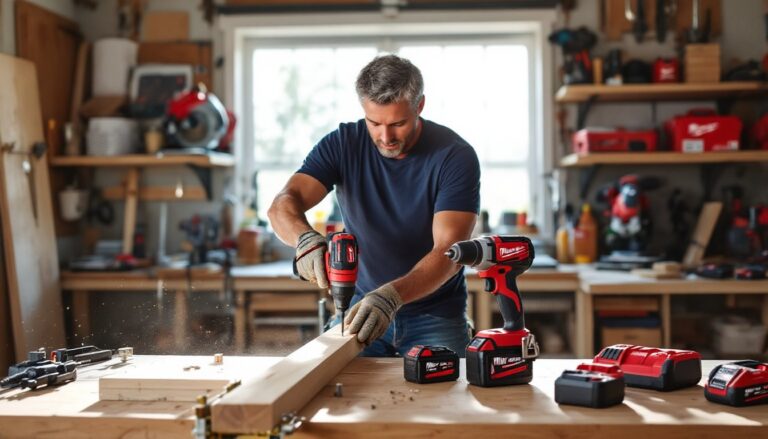
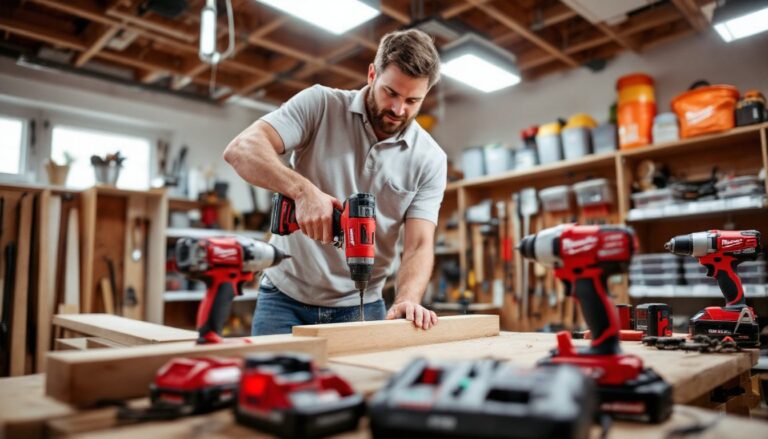
Start with a Milwaukee M18 cordless drill or an M12 compact model if space and weight matter on your projects. Drills handle both fastening and boring: they’re your workhorse. An M18 impact driver is the second tool worth investing in. Impacts drive screws faster, with less hand strain, especially into dense wood or metal studs. They also won’t twist your wrist if a screw binds suddenly.
The difference between a drill and an impact driver confuses new DIYers. A drill uses straight spinning force: an impact driver adds rotational hammering to bite through resistance. For fastening deck screws into pressure-treated lumber, an impact driver cuts your time in half. Recent independent tests show that top Milwaukee impact drivers deliver 130–190 ft-lbs of torque, enough for most fastening and light demolition work.
Consider the M12 line if you work in tight spaces, cabinets, between studs, under sinks. The compact size sacrifices some power but gains maneuverability. Battery runtime varies by load: expect 30–60 minutes of moderate driving on a single charge, less if you’re drilling through hardwood studs.
Saws and Cutting Tools
A Milwaukee circular saw or compact miter saw rounds out basic cutting capability. Circular saws are portable and handle rough framing cuts: a miter saw excels at angle and crosscuts on trim and molding. If your budget allows only one, prioritize the task you’ll do most often.
Milwaukee reciprocating saws (often called “sawzalls”) shine during demolition and rough cuts in tight spaces. They’re invaluable for cutting through drywall, old framing, and PVC pipe. Pair one with a good blade selection, wood blades, metal-cutting blades, and demolition blades each handle different materials. One popular review of best Milwaukee tools praises their cutting accuracy and durability across product tiers.
Don’t overlook a Milwaukee drill with a spade bit set for boring holes in framing. It’s cheaper than owning a dedicated hole saw kit initially, and it covers 80% of your boring needs. Add a hole saw kit later as your projects grow more complex.
Choosing the Right Milwaukee Tool System for Your Needs
Milwaukee offers three main battery platforms: M12 (12-volt), M18 (18-volt), and M28 (28-volt). For homeowners, M18 is the sweet spot, enough power for most residential work without overkill weight.
M12 excels in compact applications: trim work, driving cabinet screws, drilling pilot holes in tight quarters. Many best Milwaukee drills in the M12 category deliver surprising torque for their size.
M18 handles foundation work: framing, deck building, running through dense materials. If you’re buying your first system, M18 tools cover more projects without exhausting you from repetitive tool swaps.
Consider your workspace and storage. If you own a small garage or apartment workshop, M12 tools take less shelf space and weigh less to carry up and down stairs. If you’re tackling outdoor decking or fence projects, the extra power of M18 saves fatigue.
Battery amp-hours (Ah) matter too. A 4.0Ah battery costs more than a 2.0Ah but runs longer. Expect to pay a premium for Milwaukee fuel tools, the premium line that spins faster and handles sustained loads better. For occasional projects, standard Milwaukee cordless drills and tools deliver solid value. For frequent use, fuel models justify their cost through runtime and durability.
Don’t rush to buy every Milwaukee tool at once. Start with a drill-driver and impact driver combo, add a saw based on your first project, then fill gaps as needs emerge. This approach lets you learn which tools suit your style before investing heavily in models you might not use.
Getting the Most Out of Your Milwaukee Tools
Maintenance and care extend tool life significantly. Store batteries in a cool, dry place, not in a hot garage or freezing shed. Extreme temperatures reduce charge capacity and lifespan. Check battery terminals for corrosion before every job: a cotton swab with light contact cleaner keeps contacts clean and ensures solid connections.
Clean tool vents after dusty jobs. A small brush or compressed air clears sawdust and debris that can block cooling fins. For drills and impacts used on concrete or stone, wear safety glasses and a dust mask: silica dust causes serious lung damage over time. If you’re cutting masonry, a HEPA-rated shop vacuum attached to your saw prevents dust clouds.
Chuck maintenance prevents slipping bits and bits broken mid-project. Tighten the chuck firmly but don’t over-torque it by hand, you’ll bend the chuck key or crack the chuck itself. Inspect bits and saw blades regularly: dull blades create heat, burn wood, and waste battery power. Sharp blades cut faster and last longer.
When buying Milwaukee tools on sale or checking out Milwaukee tools deals during holiday promotions, stock up on batteries and chargers, not multiple drills. A second battery lets you charge one while using the other, critical on longer projects. Many Milwaukee tools sales events offer bundle pricing on batteries, which often costs less than buying separately.
Keep your Milwaukee tools catalog handy (available online or from retailers). It shows accessory compatibility, battery options for each tool, and warranty details. Understanding which batteries fit which tools prevents frustrating trips back to the store.
Conclusion
Milwaukee power tools represent a practical investment in reliable equipment that supports serious DIY projects for years. By starting with essential tools like a cordless drill and impact driver, choosing the right battery platform for your workspace, and maintaining your gear properly, you’ll build a system that grows with your skills and ambitions. Whether you’re tackling your first deck or renovating a kitchen, Milwaukee tools earn their place in your workshop.