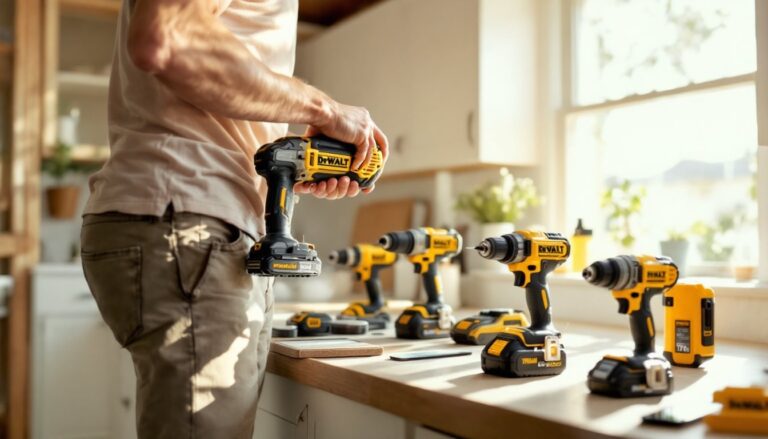
DeWalt cordless power tools have earned their reputation through durability and dependability on job sites and in home workshops alike. Whether you’re hanging drywall, building shelving, or tackling a deck renovation, cordless tools eliminate the frustration of extension cords and give you freedom to move around your workspace. For homeowners stepping into serious DIY work, understanding which DeWalt cordless tools deliver real value, and how to keep them running strong, can transform how you approach projects. This guide walks you through the essentials, from choosing your first drill to building a complete system that grows with your needs.
Table of Contents
ToggleKey Takeaways
- DeWalt cordless tools eliminate extension cord frustration and enable freedom of movement, making them ideal for homeowners tackling DIY projects from shelving to deck renovation.
- The 20V MAX battery system is the best entry point for most homeowners, offering the optimal balance of affordability, power, and compatibility across a wide range of tools.
- Build your toolkit strategically by starting with a drill-driver and impact driver, then expanding with saws and grinders as specific projects demand rather than buying everything upfront.
- Proper battery care—storing in cool, dry conditions, avoiding complete discharge, and investing in a dual-port charger—maximizes tool lifespan and prevents frustrating downtime during projects.
- Match the right tool to each job: use impact drivers for fastening hardened materials and drills for actual drilling to maximize battery efficiency and reduce unnecessary wear.
Why DeWalt Cordless Tools Are a Game-Changer for Home Projects
Cordless tools freed homeowners from the constraints that plagued DIY work for decades. No more hunting for outlets, untangling cords, or losing ten minutes of productive time because your extension cord won’t reach the far corner of the garage. DeWalt’s 20V MAX and FlexVolt systems dominate the residential market because they balance power, runtime, and cost better than most alternatives.
The real advantage? Consistency and speed. A DeWalt drill-driver delivers the same torque on your hundredth hole as on your first, with no motor bogging down. Battery technology has matured to the point where you can run a full afternoon of projects without swapping cells, and DeWalt tools on sale often make entry into the ecosystem affordable. Cordless also means cleaner air quality indoors, quieter operation in confined spaces, and no fuel or spark plugs to maintain like older gas tools.
For homeowners, this translates to fewer excuses to skip that closet shelving project or delay fence repairs. You grab the tool, charge the battery the night before, and get to work. DeWalt’s ecosystem, where batteries are interchangeable across the entire product line, means your investment grows smarter over time. Buy a drill today, add a circular saw next month, and both run on the same power cells. It’s efficient, it’s practical, and it’s why DeWalt cordless tools have become the standard homeowners reach for.
Essential DeWalt Cordless Tools Every Homeowner Should Consider
Building a home toolkit doesn’t mean buying everything at once. Start with core tools that address the jobs you’ll actually do, then expand based on projects that come up. Here’s what matters:
Drill-Drivers and Impact Drivers
A DeWalt drill-driver is where most homeowners start. The DCD771C or DCD777C models are compact, lightweight, and handle everything from hanging shelves to pre-drilling joists for deck screws. These entry-level all DeWalt tools cover basic fastening and small-hole drilling in wood and light metal. Pair it with a 20V MAX battery and you’ll power through most interior projects.
If you’re driving fasteners into harder materials, lag bolts into treated lumber, structural screws into rim joists, you’ll want an impact driver. The DCF887 delivers more rotational force (torque) without the twisting wrist strain you’ll feel with a standard drill-driver. Impact drivers excel at fastening work: regular drills excel at actual drilling. Many homeowners own both and swap based on the task.
Who sells DeWalt tools? Big-box retailers like Home Depot and Lowe’s carry the full range, with the advantage of same-day pickup and easy returns. Specialists like tool-rental centers often stock DeWalt cordless power tools as rental equipment, so you can test before buying. Online platforms round out availability, though watch shipping costs on heavier kits.
Circular Saws and Angle Grinders
A DeWalt circular saw changes how you approach cutting tasks. The DCS391B (bare tool) or bundled 20V MAX kits let you rip 2x lumber, cut sheet goods to size, and make angled cuts without breaking out your miter saw each time. The blade rotates at 5,800 rpm, fast enough for clean crosscuts in 2x4s and plywood. Cordless circular saws free you from dragging a heavy corded tool around a scaffolding setup or awkward angle cuts on tall walls.
For grinding, cutting metal, or aggressive concrete work, a DeWalt angle grinder on cordless power isn’t quite the heavyweight option some want, but for light grinding, mortar removal, or cutting rebar to length on residential projects, the DCS411D gets the job done. The cordless benefit matters most when you’re working in crawl spaces or attics where corded tools create hazards.
Choosing the Right Battery System for Your Needs
DeWalt offers two main cordless ecosystems for homeowners: 20V MAX and FlexVolt. Most of all DeWalt tools and kits sold at retail are 20V MAX. It’s the sweet spot for price and performance across drills, saws, impact drivers, and sanders.
20V MAX batteries come in different amp-hour capacities: 1.3Ah, 2.0Ah, 4.0Ah, and 6.0Ah. A 2.0Ah battery weighs less and charges faster, making it ideal for light duty and quick jobs. A 4.0Ah or 6.0Ah delivers longer runtime, useful if you’re running circular saws or recip saws for extended periods. Most homeowners buy one of each and rotate them.
FlexVolt is DeWalt’s premium play: a dual-voltage battery system that delivers 20V to standard tools or 60V to heavier-duty FlexVolt-branded tools. If you’re planning to own heavy saws, a powerful drill, and shop equipment all in one system, FlexVolt makes sense. But it’s pricier. For typical homeowner projects, interior trim, deck building, light landscaping, 20V MAX with strategically chosen batteries handles 95% of work.
Charging speed matters more than most realize. Older single-port chargers take 30-60 minutes per battery. A modern dual-port charger (like DeWalt’s DCD771C) runs two batteries simultaneously in 45 minutes. If you’re tackling a full Saturday of projects, buy a third battery and a dual-port charger so one cell is always available while others charge. It’s a small investment that prevents frustration. Cheapest DeWalt tools kits often come with smaller batteries and basic chargers, acceptable for light use, but plan to upgrade the charging setup if projects expand.
Tips for Maximizing Tool Performance and Battery Life
Cordless tools ask less of you than corded models in many ways, but they demand discipline in battery care. Store batteries in a cool, dry place, not in an unheated garage in winter or a hot attic in summer. Extreme temperatures degrade lithium-ion cells faster than normal use.
Don’t run batteries completely dead on every charge. Modern DeWalt batteries include smart charging that prevents over-discharge, but running them to zero shortens overall lifespan. Swap to a fresh battery when runtime starts noticeably dropping. If you find cheap DeWalt tools on sale, often it’s an older model or basic kit with smaller batteries, fine for starter projects, but verify the battery capacity before assuming you’ve scored a deal.
Clean tool vents and air passages monthly if you work in dusty conditions like sanding drywall or cutting concrete. Dust buildup forces the motor to work harder and generates excess heat. A short burst from a shop vac across the vents keeps the tool cool and efficient.
Use the right tool for the job. A drill-driver isn’t optimized for driving 100 deck screws: an impact driver is. Using the wrong tool burns battery capacity faster and creates unnecessary wear. Similarly, cordless battery tools deliver consistent power output, meaning a drill running its last amp-hour performs the same as when fresh. Use this reliability to your advantage: don’t assume a slow hole means the battery is dead: it might just mean the bit is dull or you’ve hit a knot in the wood.
When shopping for bargains on DeWalt battery tools or DeWalt power tools on sale, prioritize kit completeness: charger, batteries, and tool in one bundle. Buying bare tools (tool only, no battery) saves money upfront but costs more long-term when you realize you need a second charger or another battery. References like 13 DeWalt 20V MAX Tools We Love provide tested recommendations on which specific models deliver the best value. Reviews from Bob Vila’s Best DeWalt Tools assessment show which tools homeowners rely on season after season, and This Old House’s DeWalt tool overview breaks down practical applications for different models.
Conclusion
DeWalt cordless power tools remove barriers to getting projects done. Start with a solid drill-driver and a couple of batteries, then expand your arsenal as projects demand. Smart battery management, proper storage, and matching tools to tasks keeps your investment running strong for years. Whether you’re buying cheapest DeWalt tools to test the system or investing in a full 20V MAX kit, the foundation is the same: consistent power, interchangeable batteries, and reliability when your project can’t wait.